
Healing from Trauma, Cancer, and Self-Blame
What if the thing that explains your pain also becomes the thing you use to punish yourself?
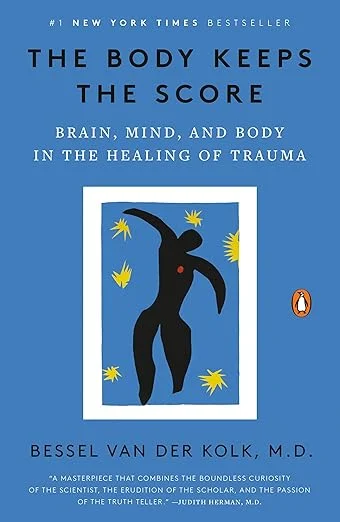
That’s what happened to me, years after I first read The Body Keeps the Score.
Discovering the Book That Made Sense of My Pain
I first came across The Body Keeps the Score shortly after it was published, and it confirmed what I had long suspected: the trauma I had endured hadn’t just affected my mind—it had taken root in my body.
Throughout my life, I’d experienced an array of physical symptoms—some serious, others minor. Each time, my doctors ran tests, explored possibilities, and came up empty. The book finally gave those mysteries a name. It was a relief to have a framework that made sense.
When Life Took a Turn
In December 2024, I found a lump on the right side of my body. At the ER, it was initially dismissed as a hematoma. But three days later, my general practitioner urged me to see an oncologist.
It took two weeks to get that appointment—and another two weeks for a biopsy.
In that month of waiting, my mind kept circling back to trauma. The body keeps the score, I told myself. I became convinced the lump was a manifestation of my unhealed pain.
I did everything I could to “release” it:
- I visualized the people who had hurt me and forgave them in my mind.
- I meditated and prayed.
- I practiced mindfulness with every ounce of energy I had.
The Diagnosis and the Spiral
In January, I was diagnosed with B‑cell lymphoma.
My doctor was gentle but direct: this wasn’t genetic, inherited, or preventable. It was, in his words, “the luck of the draw.”
I accepted his explanation and pushed through four months of treatment. But when I returned home to recover, a quiet shame began to take hold.
I couldn’t shake the feeling that I had done something wrong. That somehow, I had let this happen to me. Logic didn’t help. The doctor’s reassurance didn’t help. I was still furious with myself.
I thought of those three weeks before the diagnosis—how hard I had worked to fight something I couldn’t even name. And in that reflection, the book returned to me.

When Help Turns Into Harm
The Body Keeps the Score had once been a lifeline. It gave language to unexplained symptoms and reminded me that trauma lives in the body when it has nowhere else to go.
But somewhere along the way, I twisted its message. I didn’t just read it as an explanation—I absorbed it as an accusation.
I turned it into evidence of my own inadequacy.
I expected myself to survive trauma without any lasting damage. For years, I blamed myself for my depression. Now, I was blaming myself for cancer.
Breaking the Pattern
One night, I sat on my bathroom floor, gripping my cane—a silent witness to months of chemotherapy. It felt less like a medical tool and more like a symbol of failure.
I messaged a friend and admitted I was in crisis. I told her I felt like I was chasing demons and running against the wind, knowing I would never catch either.
Even in that moment of unraveling, I clung to a single fragile truth:
I can’t control what happens to me, but I can control how I respond.
My friend gently reminded me to pause, to respect myself, to return to what had once helped.
So I went back to The Body Keeps the Score. This time, I read it differently—
- Not as a list of failures.
- Not as proof of my weakness.
- But as a compassionate explanation for what I had survived.
The author never meant to condemn me. He meant to free me.

A New Understanding
Looking back on those weeks before my diagnosis, I finally saw it clearly:
I had weaponized the very book that once brought me relief.
I had turned a source of understanding into a mirror of blame. But now, I am learning to let it return to what it was always meant to be—a light, not a lash.
An Unfinished Story
I don’t really have a conclusion, because some stories don’t end.
The dialogue between the me of now and the me of yesterday will continue. But I carry this insight forward:
Give yourself the grace, love, and respect you so freely give to others.