I believe our first cry isn’t just a plea—it’s a declaration.
A declaration that we were born deserving of care, of love, of life.
From the moment we enter the world, power and strength already run through our veins. I’ve seen it again and again in the faces of newborns.
The Cry That Declares Our Worth
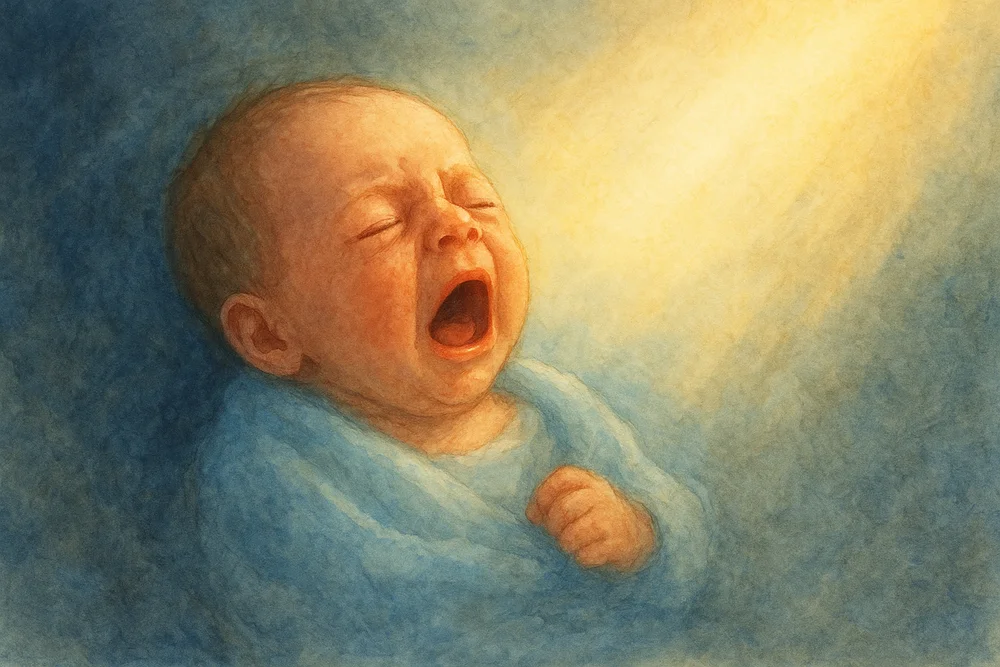
Recently, I visited a friend who was caring for her three‑week‑old grandchild. The baby stirred before the bottle was ready. Hungry and alert, he began to cry—softly at first, then louder and more urgent. His little face reddened, tears welled, and he wailed with all the force he could muster.
I admired him.
In that tiny face, I saw the raw and beautiful demand to live. He wasn’t going to quietly slip into hunger. He expected to be fed, to be nourished, to survive.
That expectation—the unshakable belief that we deserve to be sustained—is something we are all born with.
But over time, many of us lose that belief.

Some lose it through subtle disappointments, others through profound injustice. I’ve long since stopped trying to make sense of why care is so unevenly distributed in this world. It’s a truth that can bring me to my knees—but more often, it fuels my determination to champion those whose needs have been ignored or denied.
Reclaiming the Strength We Were Born With
The core belief behind this site is simple but radical: we can reclaim the strength and power we were born with.
It isn’t easy. It takes honesty, courage, and work. But it is possible.
Two of the most transformative tools I’ve found on this journey are radical acceptance and acting as if.

Radical Acceptance
Twenty years ago, a new therapist introduced me to the concept of radical acceptance. I tend to be skeptical of new ideas, but this one made sense the moment I heard it.
She explained it simply:
You can accept that events occurred, and you can accept that there is nothing you can do to change them.
She didn’t mean the events weren’t real or that I didn’t have to process the pain. She meant that I could finally stop carrying the crushing weight of if only.
I walked out of her office lighter. It felt as if a boulder had been removed from the backpack I carried everywhere. I’ve learned more about radical acceptance since then, but that simple, radical idea sank in—and it stayed.

Acting As If
Alfred Adler, the Austrian psychiatrist and founder of Individual Psychology, introduced a concept that has become a lifeline for me: acting as if.
At its core, it means behaving as though you are already the person you want to become. Instead of waiting for courage or confidence, you take the step first—and the feelings follow.
I used this when I reunited with my paternal biological family in 2022. I had longed for this moment my entire life, but when it came, I didn’t know how to process the flood of emotions and contradictions.
So, I made a choice.
When I walked into that first big family gathering, I took a deep breath and whispered to myself, I belong.
I acted as if I belonged.
And to my surprise, everyone treated me like I did.
Becoming Our Own Birthright
That newborn’s cry—the unapologetic demand for nourishment—reminds me of something we all once knew: we were born worthy.
Not because of anything we achieve, earn, or prove.
But simply because we exist.
Belonging isn’t a prize to be won. It isn’t a gift that someone else grants us. It is a birthright.
And when life chips away at that truth—through rejection, abandonment, injustice, or silence—we can reclaim it, piece by piece.
Through radical acceptance, we stop fighting the past and start building from where we stand.
Through acting as if, we step into spaces and relationships that once felt out of reach—not because we are faking it, but because we are remembering the truth of who we are.
Radical belonging isn’t about a perfect fit. It’s about choosing to live as though we are already enough—feeding the hungry places in our souls with courage, compassion, and care.

The Invitation
If you’ve ever felt like you don’t belong, hear me now: you do.
Not because anyone else says so, but because that truth was written in your bones at birth.
It’s time to stop asking for permission to exist.
It’s time to become the belonging you’ve always deserved.