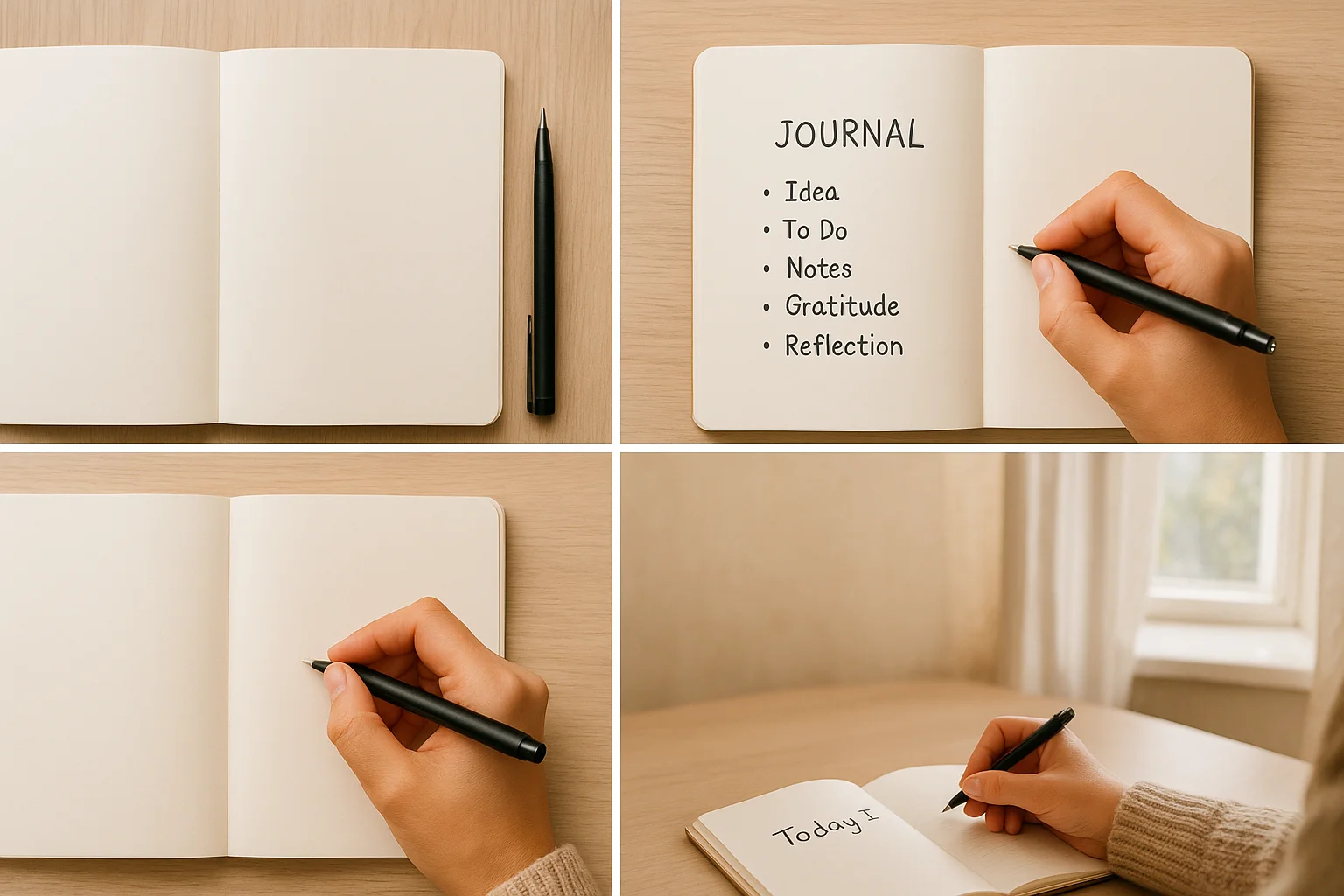

Creative Journaling Ideas for People Who Hate to Write
When I talk to people about the benefits of journaling, more often than not I hear, “I hate to write.” The image of a thick, blank journal reminds them of homework—an obligation that feels overwhelming.
The truth is, even though I know the benefits of journaling and have seen how powerful it can be, I still go through weeks when sitting down with a journal feels like a chore. Even one-line journaling formats can feel heavy at times.
If you’re one of those people who don’t enjoy writing,
here’s the good news: journaling doesn’t always mean pages of writing.
There are plenty of journaling styles and creative journaling ideas that don’t require long essays or endless words.
The key is finding a type of journaling practice that works with your brain, not against it.
Ways to Journal Without Writing Long Pages
Gratitude Journaling
Gratitude journaling is the practice of writing down things you’re thankful for, both big and small, to cultivate a more positive outlook.
- What is something simple today that brought me joy?
- Who is someone I’m grateful for, and why?
- What part of my body or health am I thankful for right now?
- What is a small comfort in my home that I often take for granted?
Lists Journaling

Make lists instead of journal entries:
- 5 things I’m grateful for
- 3 challenges from today
- 10 songs that make me feel calm
This keeps journaling short, visual, and to the point.
Art Journaling
Draw, doodle, or use colors to express your day. Stickers, collage, or sketches can capture emotions without words. Sometimes a color or image says more than a paragraph.
Prompt Cards
Use journal prompt decks (or write prompts on slips of paper). Each day, pull one: “What was one challenge today?” Write a sentence or two — or even just a word. Done
One-Line-a-Day Journaling
Commit to a single sentence each night. Example: “I survived a tough meeting, but I’m proud I spoke up.” Over time, these one-liners create a powerful record of your life without overwhelming you.
Mind dump
This is easy and very rewarding. Find a piece of paper, a thick journal, or a template created for the mind number. Empty your mind, write everything that you’re thinking down, don’t pause, don’t worry if you repeat the same things, the point is that you just get your ideas out. A bonus is to look back at what you wrote and see if you find patterns, but even if you don’t do that, you will feel better for having emptied your mind.

Guided Journals
There are many journals where you answer questions, usually on a specific topic, like mood tracking, or quick responses. Many have a section to record your mood where you simply circle a number, and easy prompts where you say what you’re grateful for or align of what you are looking forward to. You can do these every day, or you can do these, whatever you have time or the thought occurs to you.
Tips to Make Journaling Work If You Hate Writing
- Keep it short: Even 2 minutes counts.
- Use prompts: Having a question to answer prevents blank-page anxiety.
- Ditch perfection: Spelling, grammar, and neatness don’t matter.
- Experiment: Try different methods until one sticks.
- Try guided journals to answer predetermined questions on a variety of topics

Final Thought
If you hate writing, don’t let that stop you from journaling. Journaling isn’t about being a writer — it’s about being honest with yourself. Whether you use voice memos, lists, doodles, or just a single line a day, the practice can help you manage emotions, find clarity, and track your growth in a way that feels natural.